Your Swivel Joint Supplier
Arm-Tex provides a full line of pipe swivel joints from OPW Engineered Systems, FMC Chiksan, Excel, Dixon, and Liquip that are versatile enough to handle a wide range of applications, including the petroleum, chemical, petrochemical, mining, refining, distilling, brewing, ink and paint industries.
 We stock various materials, sizes, styles, and end configurations from leading manufacturers OPW and FMC. Because we are direct distributors for these manufacturers, we can give you quick delivery and great prices. When quality and performance matter, turn to Arm-Tex to find the right swivel joints for your unique application. Choose a standard or custom-fabricated swivel joint. Pressure ranges up to 20,000 psi with carbon steel, brass, stainless steel, ductile iron, aluminum, Hastelloy, and a host of other materials for almost all applications. Cryogenic swivels are available for NGL loading or unloading.
Need help finding a swivel joint for your special application? Our knowledgeable sales staff is here to help. Contact Arm-Tex today for more information on the swivel joints we carry or give us a call to get help now.
How Swivel Joints Work
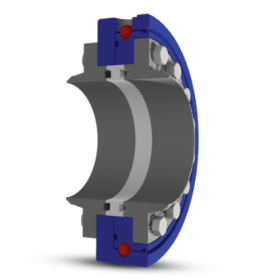
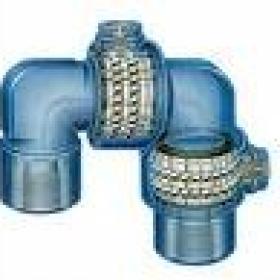
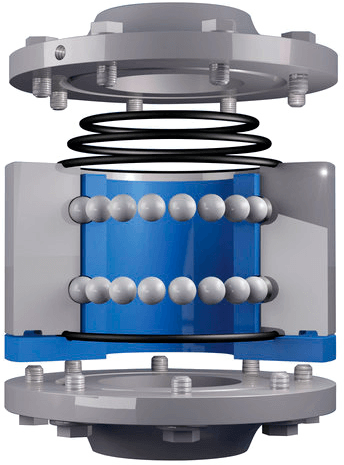
A swivel joint consists of two concentric pipe sections joined by an integral ball-bearing race and sealed with elastomeric or metal seals. The inner and outer races rotate against the ball bearings, allowing the connected piping to move freely on one or more planes while maintaining a continuous, leak-free flow path.
The ball-bearing design distributes radial and axial loads across the bearing race rather than concentrating stress at a single weld or fitting connection. This is critical in loading arm assemblies, where the articulated piping must track the movement of a tank truck, railcar, or marine vessel without binding or placing bending loads on fixed pipe. In hose assemblies, swivel joints eliminate twisting forces that cause hose reinforcement failure and premature wear.
Most industrial swivel joints use either single-seal or dual-seal configurations. Single-seal designs are appropriate for general-service fluid transfer at moderate pressures. Dual-seal designs, such as those used in the OPW ENDURA 8000 series, add a secondary containment seal that protects the bearing race from the process fluid, extending service life in corrosive or abrasive services.
Swivel Joint Materials and Pressure Ratings
Selecting the correct material for a swivel joint is as important as selecting the pressure rating. The process fluid, operating temperature, and environmental conditions all influence which alloy or body material will perform reliably over the long term. We supply industrial swivel joints in carbon steel, ductile iron, stainless steel, aluminum, brass, Hastelloy, and other specialty alloys. Each material set is suited to different process conditions:
Carbon steel is the standard choice for petroleum, fuel oil, and general hydrocarbon service. Ductile iron is common in water, wastewater, and lower-pressure petrochemical applications. Stainless steel handles corrosive chemical service, including acids, caustics, and high-purity products. Aluminum is used where weight reduction matters, such as in portable transfer equipment and certain loading arm configurations. Hastelloy and other high-alloy materials are available for especially aggressive chemical environments.
Pressure ratings range from 750 psi to 20,000 psi.
Swivel Joint Configurations and Styles
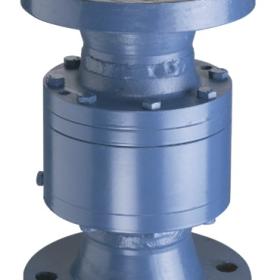
Rotating pipe joints are available in a range of configurations to match the geometry and movement requirements of the application. The most common configuration styles used in loading arm and process piping applications include straight (180-degree), 90-degree elbows, 45-degree elbows, and combination units that stack multiple swivel planes into a single assembly.
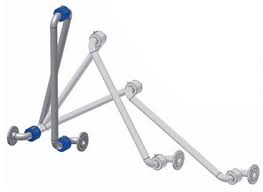
For loading arm systems, multi-plane configurations are essential. A typical top-loading arm uses two or three swivel joints at key pivot points to allow the boom and drop pipe to articulate in the horizontal and vertical planes simultaneously. Bottom loading arms and marine loading arms have similar requirements, though the range of motion and load requirements differ by application.
Loading Arm Swivel Joints
Loading arm swivel joints are among the most mechanically demanding rotating pipe joints in fluid transfer. A loading arm operates outdoors through temperature extremes, connects and disconnects repeatedly under pressure, and must articulate in multiple planes without leaking. The swivel joints at each pivot point bear the dynamic loads of arm movement and the static pressure of the product line.
When specifying loading arm swivel joints, engineers need to confirm that the:
- Joint's pressure-temperature rating matches the product being transferred
- Body material is compatible with the fluid
- End connections match the adjacent pipe or hose specifications
Arm-Tex can assist with this specification process and can supply complete loading arm assemblies as well as replacement swivel joints for arms already in service.
High-Pressure Swivel Joints
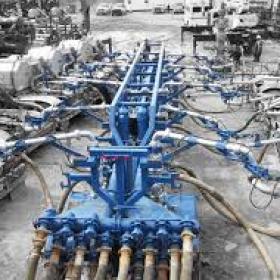
High-pressure swivel joints are used in applications where standard general-service units are not rated for the operating conditions. Hydraulic fracturing, well service, offshore manifold systems, and certain chemical injection applications operate at pressures that require purpose-built, metal-to-metal seal designs with full traceability on material certification.
At Arm-Tex, we stock and supply high-pressure swivel joints and can assist with selecting the correct pressure class, end connection style, and material specification for well service, chemical injection, and other high-pressure fluid transfer needs. Contact our team for specifications and availability.
Industries and Applications We Serve
Industrial swivel joints are used wherever a piping system requires controlled rotational freedom while maintaining a leak-free connection. The industries and applications we serve include:
- Petroleum terminals and refineries use swivel joints in truck, railcar, and marine loading arm systems to transfer crude oil, refined fuels, and petrochemicals.
- Chemical and petrochemical plants rely on swivel joints in process piping to prevent thermal expansion, vibration, or equipment movement from introducing stress into fixed pipe runs.
- Mining operations use swivel joints in slurry transfer, dewatering, and reagent dosing systems where abrasive service demands durable bearing designs.
- Distilling, brewing, and food-grade processing facilities use stainless steel swivel joints where sanitary construction and CIP (clean-in-place) compatibility are required.
- Agricultural and irrigation systems use swivel joints on overhead irrigation pivots and pump transfer connections.
- Ink, paint, and industrial coatings producers use swivel joints in piping systems where frequent product changeovers and chemical compatibility are concerns.
If your application is not listed here, contact Arm-Tex. Our sales team has experience across a broad range of fluid transfer applications and can help determine whether a standard or custom swivel joint is the right solution.
Swivel Joint Manufacturers We Carry
We supply industrial swivel joints and rotating pipe joints from manufacturers like:
- OPW Engineered Systems — OPW is one of the most widely specified manufacturers of swivel joints for petroleum and chemical terminal applications. The 3500 General Service series and the ENDURA 8000 series cover numerous line sizes and service conditions. OPW also offers repair kits for field maintenance.
- FMC Chiksan — Chiksan ball-bearing swivel joints have been in industrial service since 1928. The line covers general industrial service, up to 20,000 psi high-pressure well service, and includes sour gas-rated models. Sizes range from 3/8 inch to 12 inches.
- Excel Loading Systems — Excel swivel joints are designed for bulk liquid and gas transfer in loading arm systems. Excel products integrate with the Excel loading arm product line but can also be specified independently for compatible piping applications.
- Dixon — Dixon supplies swivel joints and rotating pipe joints for a range of industrial transfer applications, including those requiring quick-connect compatibility.
Why Source Swivel Joints Through Arm-Tex
Arm-Tex has been serving domestic and international customers in the fluid handling equipment industry since 1989. As a direct distributor for OPW and FMC Chiksan, we have access to pricing, lead times, and technical support that general industrial distributors cannot match.
We stock swivel joints in multiple sizes, styles, and materials for fast delivery on common specifications. For nonstock or custom requirements, including specialty alloys, nonstandard end configurations, or complete fabricated assemblies, we work directly with the manufacturer to source what you need. We also carry OPW swivel joint repair kits and Chiksan rebuild parts so that maintenance teams can service joints already in the field without replacing the entire assembly.
Our team understands that a swivel joint is not a commodity purchase. The right specification matters. If you need help confirming a pressure rating, cross-referencing a part number, or selecting between manufacturers for a specific service condition, we are here to help.
Browse our loading arm products or view our full product line to see how our swivel joint inventory fits into a complete fluid transfer system.
Get the Right Swivel Joint Spec the First Time
Choosing the wrong pressure rating, material, or end configuration means downtime you cannot afford. Our team has decades of experience matching rotating pipe joints to the exact demands of petroleum, chemical, and industrial fluid transfer applications. And, as a direct distributor for OPW and FMC Chiksan, we can move quickly on pricing and availability. Contact Arm-Tex today or submit a quote request, and a member of our sales team will follow up with the specifications you need.
Frequently Asked Questions About Swivel Joints
What is the difference between a swivel joint and a flexible hose for handling pipe movement?
Swivel joints and flexible hoses address pipe movement, but in different ways. A flexible hose absorbs movement through elastic deformation of the hose wall and reinforcement layers, which introduces fatigue over time and limits its pressure rating at higher temperatures. A swivel joint uses precision ball bearings to allow true mechanical rotation between two rigid pipe sections. Swivel joints maintain full rated pressure capacity throughout their rotational movement and do not degrade from cyclic flexing the way hoses do. In high-cycle applications or at elevated pressures, swivel joints are the more durable long-term solution.
How do I know what pressure class to specify?
The minimum information needed to specify a swivel joint pressure class includes the maximum operating pressure, the hydrostatic test pressure (typically 1.5 times the operating pressure), and the temperature at which those conditions occur. For high-pressure well service applications, the cold working pressure (CWP) rating of the swivel must exceed the maximum anticipated wellhead or pump discharge pressure with an appropriate safety margin. For sour gas service, the material specification must also meet NACE MR0175. Our sales team can assist with pressure class selection if you provide your operating conditions.
Can swivel joints be used for cryogenic service?
Yes. Cryogenic swivel joints are available for NGL (natural gas liquids) loading and unloading applications. Cryogenic service requires materials and seals rated for extremely low operating temperatures; standard carbon steel and elastomeric seals are not suitable for cryogenic service. Arm-Tex supplies cryogenic-rated swivel joints for NGL applications. Contact us with your temperature range and pressure requirements to confirm the correct specification.