
When transferring hazardous, caustic, or corrosive fluids, the connection point is where risk concentrates. OPW Kamvalok dry disconnect couplers close that risk, providing automatic dual-direction shutoff that blocks flow from both the coupler and the adapter the moment a connection is broken. As an authorized OPW distributor, Arm-Tex supplies the full Kamvalok line to engineers, safety managers, and procurement teams working in chemical processing, petrochemical, refining, and bulk transport operations.
OPW has more than 100 years of fluid handling experience behind the Kamvalok design. These couplers are widely considered the industrial standard for dry break performance, protecting operators and meeting environmental compliance requirements.
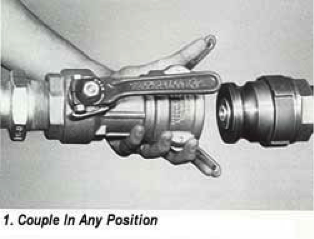

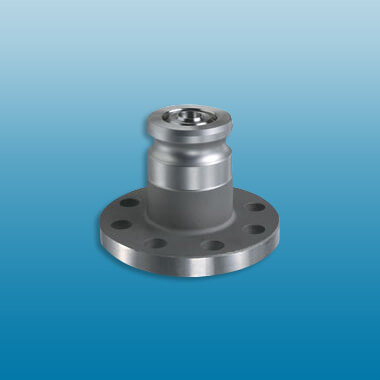
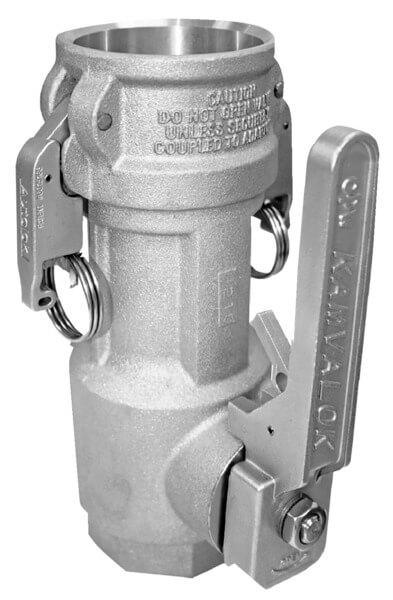
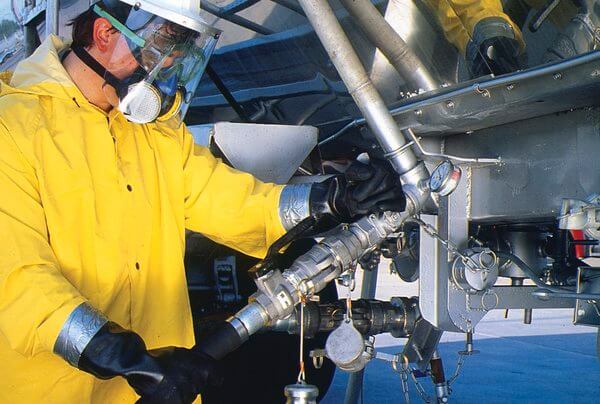

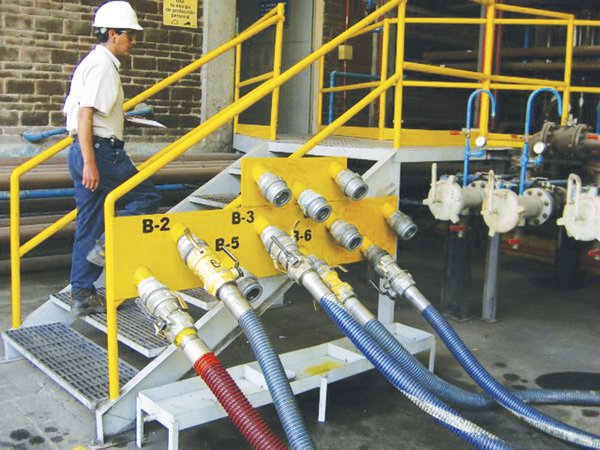
Kamvalok Fitting Applications
Kamvalok dry disconnects can be used in any range of applications, including:
- Paint
- Fatty acids
- Inks
- Adhesives
- Diesel exhaust fluid
- Petroleum products
- Ag-chemicals
- Many acids and caustics
Contact Arm-Tex today to see how caustic dry-break couplings can serve your application.
How OPW Kamvalok Dry Break Couplings Work
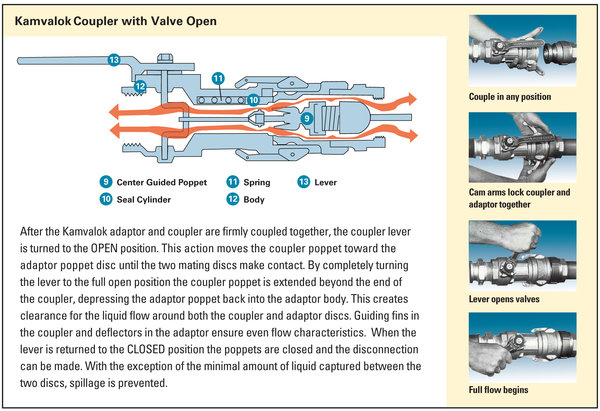
Kamvalok couplers use a spring-actuated poppet in the male adapter and a half-turn poppet valve in the female coupler. Both sides spring closed independently upon disconnection. This dual-closure design means the valve does not need to be manually closed before disconnecting. If an accidental disconnection occurs mid-transfer, both poppets close automatically, stopping product flow and containing residual line fluid.
The SST locking lever assembly locks in position to prevent accidental opening or closing of the valve during transfer. For additional protection, Autolok™ locking arms engage automatically with a positive click confirmation and require a deliberate tug on the lock release to disengage, not a button push or clip removal.
This combination of passive and active safety features is what makes Kamvalok caustic dry break couplings a practical choice for environments where accidental disconnection or operator error must not result in a spill.
Spill Prevention and Vapor Control
In chemical transfer and hazardous fluid handling, residual product in the line is the primary source of spills at the connection point. The Kamvalok design eliminates virtually all residual spillage during the connection and disconnection process by sealing both halves before any line fluid can escape.
For VOCs (volatile organic compounds) and high-vapor-pressure fluids, the closed-loop loading capability keeps product in the line and out of the atmosphere. This directly addresses fugitive emission concerns that affect worker safety and regulatory compliance. The coupler contains vapors during transfer, which matters for facilities managing EPA reporting requirements or OSHA exposure limits for chemical agents.
If your application involves corrosive acids, caustic materials, solvents, or other hazardous chemicals, these Kamvalok chemical transfer couplers reduce the hazard exposure associated with every make-and-break connection your operators perform.
Materials, Seal Options, and Pressure Ratings
Kamvalok 1700DL Series couplers are available with either an aluminum body or a stainless steel body, both with duplex stainless steel internals, including the shaft link, cam arms, and poppet link. Material selection should reflect the fluid chemistry and operating environment.
Pressure ratings vary by coupler size:
- 1-1/2" size: 210 psi (15 bar) maximum working pressure
- 2" size: 150 psi (10.5 bar) maximum working pressure
- 3" size: 120 psi (8.5 bar) maximum working pressure
Seal material options cover a broad range of chemical compatibility and operating temperatures:
- Buna-N: -20°F to 212°F (-29°C to 100°C)
- Fluorocarbon (FKM/Viton): -20°F to 400°F (-29°C to 204°C)
- PTFE: -15°F to 400°F (-26°C to 204°C)
- EPDM: -50°F to 250°F (-46°C to 121°C)
- Chemraz®: -15°F to 400°F (-26°C to 204°C)
Connection configurations include NPT, flanged 150 lb., and flanged 300 lb. end connections. If you need assistance selecting the correct body material, seal type, or end connection for your fluid and process conditions, contact our team directly.
Industrial Applications for Kamvalok Chemical Transfer Couplers
Kamvalok couplers are specified across industries where product integrity, operator safety, and environmental accountability all intersect. Common applications include:
- Chemical processing and petrochemical facilities use Kamvalok industrial dry disconnect systems at transfer points for acids, caustics, solvents, and liquid chemical intermediates, fluids where even minor spillage creates safety incidents or compliance exposure.
- Bulk transport and tank truck loading operations benefit from the Autolok™ arms and locking lever, which add an additional layer of protection against pull-away disconnection during active transfer. The closed-loop loading design also supports vapor recovery at the loading point.
- Refining operations handling petroleum products, diesel exhaust fluid, and process chemicals use Kamvalok couplers for their ability to maintain a dry break in high-cycle transfer environments where fast maintenance access is required.
Additional applications include paint, inks, adhesives, fatty acids, liquid soaps, pharmaceuticals, agricultural chemicals, and lacquers. The availability of multiple seal materials makes it practical to spec a single coupler platform across multiple fluid types within the same facility.
Why Source Kamvalok Couplers Through Arm-Tex
Arm-Tex has been a direct distributor of fluid handling equipment since 1989, serving domestic and international customers across chemical, petrochemical, refining, and bulk transport operations. We stock and supply the full OPW Kamvalok line and can assist with product selection when fluid compatibility, pressure conditions, or end connection requirements need to be matched against specific process parameters.
Our team works with engineers and procurement professionals who need accurate product data, fast quote turnaround, and access to technical documentation. OPW installation instructions, dimensional drawings, and the full dry disconnect catalog are available for download below.
For applications that go beyond standard Kamvalok configurations, we also supply OPW Drylok™ Disconnect Couplers, Mann-Tek Dry Disconnect Couplings, and a full range of dry disconnect accessories.
Get the Right Kamvalok Configuration for Your Application
Specifying a dry disconnect coupler for hazardous or caustic fluid transfer is a decision with real safety and compliance consequences. Our team at Arm-Tex works directly with our customers to match the correct Kamvalok body material, seal type, and end connection to their specific fluid chemistry and operating conditions. Submit a quote request today and get accurate product information from a distributor who knows the OPW line.
Frequently Asked Questions About OPW Kamvalok Dry Disconnect Couplers
What is the difference between a dry disconnect coupler and a standard cam-and-groove coupler?
A cam-and-groove coupler (like an OPW Kamlok) connects and disconnects quickly but does not close off flow automatically when separated. A dry disconnect coupler, like the Kamvalok, seals the coupler and the adapter sides independently before any fluid escapes. This makes dry disconnects the required choice for hazardous, toxic, corrosive, or VOC-producing fluids where product loss at the connection point is a safety or compliance issue.
Are Kamvalok couplers compatible with caustic soda and sulfuric acid?
Kamvalok couplers are designed for use with numerous acids and caustics, but compatibility depends on the body material and seal selection. Stainless steel body construction is generally preferred for aggressive caustics, and seal material must be matched to the specific chemical. PTFE and Chemraz® seals provide the broadest chemical resistance across strong acids and caustic applications. Contact Arm-Tex with your specific fluid, concentration, and temperature to confirm the correct configuration.
How often do Kamvalok couplers require maintenance, and how difficult is it?
OPW designed the Kamvalok with a unique stuffing-box construction that allows disassembly and seal replacement without specialized tooling. Seal kits are available for field maintenance. Maintenance frequency depends on cycle count, fluid aggressiveness, and operating temperature. Facilities with high daily cycle counts or exposure to aggressive chemicals should inspect seals on a scheduled basis. Consult the OPW installation and operations manual, available for download through our product page, for specific maintenance guidance.