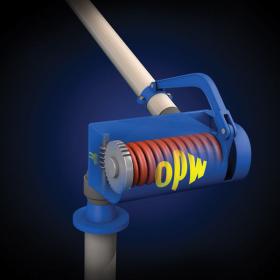
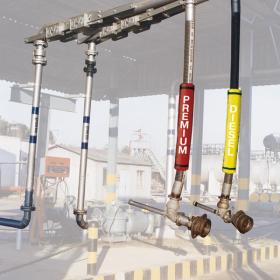
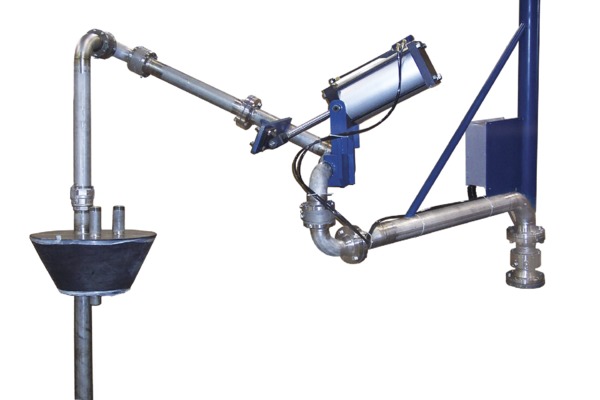
 Loading arms eliminate the need for heavy and cumbersome hoses by using articulating swivels joints and spring or weighted counterbalance to make the transfer process safer for the operator, eliminate spills and releases, and provide a longer-lasting solution to the transfer process.
Arm-Tex is proud to offer a complete line of top & bottom loading arms from OPW, Excel, and Liquip for trucks, railcar, drum, and IBC Tote loading.
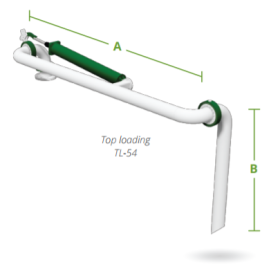
Top loading arms can be equipped with vapor recovery hatch plates and seals, plus overfill monitors to eliminate vapor release and product overfills. Bottom loading petroleum, LPG, LNG, and unit train transfers are all possible and safer by using loading arms versus hoses. Common industries using loading arms are petrochemical, shipping, oil and gas, wastewater treatment plant, gantry systems, and many other commercial applications.
With workplace safety being so important, Arm-Tex can offer many solutions to fit your application from OPW, Excel, and Liquip loading and unloading arms. Arm-Tex is your source for industrial loading arms.
Contact us today to find out more about the fuel loading arm equipment & accessories we offer and help us choose the right solution for your environment.
FAQs
Why do facilities choose fuel loading arms over hoses for petroleum transfer operations?
Fuel loading arms use articulated swivel joints and counterbalancing systems to create a controlled transfer pathway for petroleum products. Compared with manually handling heavy hoses, petroleum loading arms can improve operator ergonomics, reduce mechanical strain, and help minimize spills and product releases.
What fuel transfer applications can ARM-TEX support with industrial loading arms?
Industrial loading arms are used for fuel transfer applications involving tanker trucks, railcars, storage terminals, drums, IBC totes, and other bulk handling systems. The appropriate configuration depends on the fuel type, transfer volume, connection location, and facility requirements.
How does ARM-TEX help determine whether a top or bottom fuel loading system is right for an application?
Top fuel loading systems transfer product through an upper vessel connection and may incorporate vapor recovery or overfill monitoring equipment. Bottom fuel loading systems connect at a lower transfer point and are commonly used in petroleum and liquefied gas handling applications where the infrastructure supports bottom loading.
What should facilities consider when selecting loading arms for LPG or LNG transfer?
Loading arms for LPG or LNG transfer must be specified around the product, operating temperature, pressure, materials of construction, connection requirements, transfer configuration, and applicable facility standards. The loading arm and associated components should be engineered specifically for the intended liquefied gas service.
How can vapor recovery and overfill monitoring improve fuel loading safety?
Vapor recovery systems help control displaced vapors during fuel loading, while overfill monitoring helps identify conditions that could lead to excessive product levels. Integrating these technologies with fuel loading arms can strengthen containment and operational safety during bulk petroleum transfer.